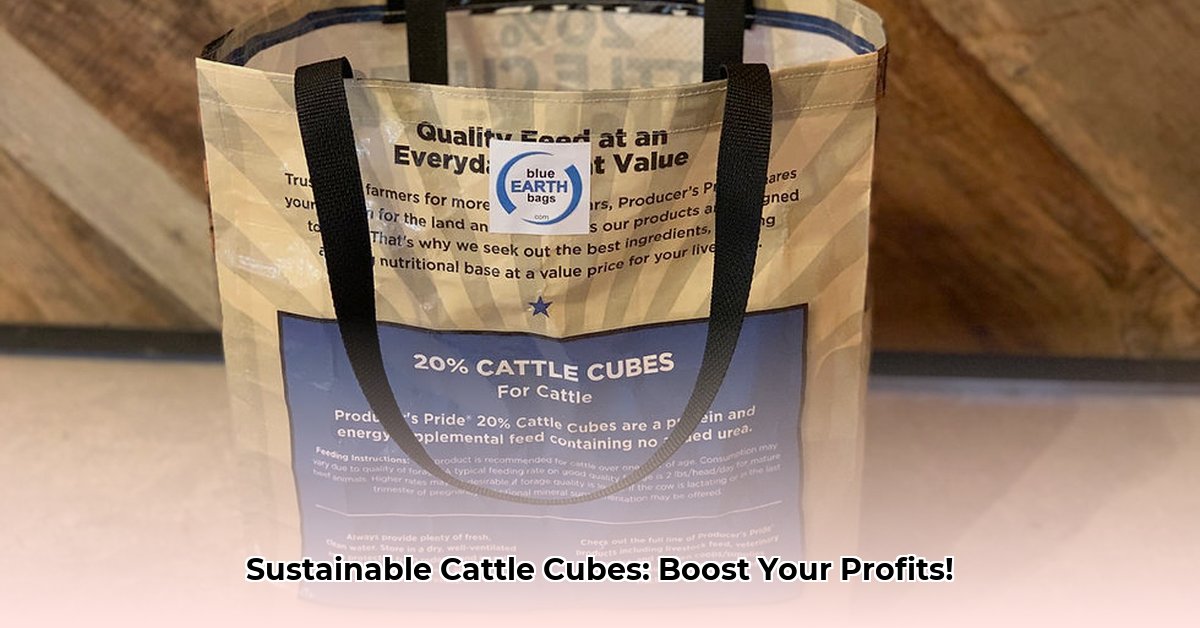
Choosing Sustainable Cattle Feed Cubes from Tractor Supply: A Practical Guide
Ranching faces pressure to increase profitability while minimizing environmental impact. Sustainable cattle feeding, using products like Tractor Supply's cattle cubes, offers a pathway to achieve both. This guide provides actionable steps to select and implement sustainable feed strategies for your operation. It emphasizes cost-effectiveness and measurable improvements in herd health and productivity. For more information on alfalfa pellets, check out Tractor Supply's options.
Understanding Sustainable Cattle Feeding
Sustainable cattle feeding goes beyond simply using "green" products; it's about optimizing resource use (land, water, energy) and minimizing the environmental footprint of your operation. This translates to healthier, more productive cattle, leading directly to improved profitability. Did you know that efficient feed utilization can significantly reduce your overall operational costs?
Key Factors for Sustainable Feed Selection:
Ingredient Sourcing: Prioritize locally sourced ingredients to reduce transportation costs and carbon emissions. Look for transparent labeling clearly stating the origin and farming practices used for the components of the feed. This transparency is crucial for making informed decisions.
Nutritional Value: Select feeds that provide complete nutrition for optimal cattle health and performance. An optimal diet minimizes feed waste and maximizes growth, directly impacting your bottom line. Are you maximizing nutrient uptake in your current feeding program?
Cost-Effectiveness: While initial costs matter, consider the long-term value. A slightly more expensive, highly nutritious and sustainably produced feed often yields better returns through improved animal health and productivity. Don't underestimate the long-term benefits of superior nutrition.
Environmental Certifications: Look for certifications or clear statements about the feed's environmental impact. Reduced greenhouse gas emissions, responsible water use, and minimal chemical fertilizer application are all positive indicators. These elements build a better brand image too.
A Step-by-Step Guide to Selecting Tractor Supply Cattle Cubes
Analyze the Label: Meticulously examine the product label. Note all ingredients, their origins (if indicated), nutritional information, and any sustainability claims. Supplement this information by reviewing Tractor Supply's website, focusing on descriptions of their sourcing and production practices.
Compare Products: Compare multiple Tractor Supply cattle cube options, focusing on price, nutritional content, and sustainability certifications. Consult your veterinarian or local agricultural extension agent for expert advice tailored to your specific herd's needs and your region's conditions. This collaborative approach ensures optimal choices.
Conduct a Trial Run: Begin with a small-scale trial of a chosen sustainable feed. Meticulously monitor your cattle's health, weight gain, milk production (if applicable), and overall performance, maintaining detailed records. Data-driven decision making is key to success.
Analyze Trial Data: Evaluate your trial results, comparing performance metrics (weight gain, milk yield, health indicators) and comparing the costs of the trial feed to your standard feed. Did your profits improve? What were the observable health improvements in your herd? Thorough data analysis is critical.
Make Informed Decisions: Based on the trial results and data analysis, determine whether a full transition to sustainable cattle cubes from Tractor Supply is economically and operationally beneficial to your ranch. This informed final decision is critical for long-term success.
Sustainable Cattle Feeding: Weighing the Advantages and Drawbacks
| Advantages | Potential Drawbacks |
|---|---|
| Reduced environmental impact | Potentially higher upfront costs |
| Healthier, more productive cattle | May necessitate adjustments to feeding plans |
| Enhanced ranch image, potential premium pricing | Limited availability in certain regions |
| Long-term cost savings potential | Requires careful monitoring and evaluation |
Dr. Emily Carter, Extension Specialist in Animal Nutrition at the University of California, Davis, highlights the importance of careful planning: “The shift to sustainable feed can maximize profitability while reducing environmental impact. However, careful monitoring and adjustments are crucial for optimal results.”
Reducing Methane Emissions through Sustainable Feed Choices
Cattle production contributes to greenhouse gas emissions, primarily methane. Sustainable feeding practices can significantly mitigate this impact. Here's how:
Strategic Feed Choices for Methane Reduction
Minimizing methane emissions requires a multi-pronged approach:
Optimized Grazing Management: Rotating pastures and ensuring diverse forage promote efficient digestion and reduce methane production. This simple management technique can deliver substantial results.
Feed Additives: Specific additives, such as 3-NOP (3-nitrooxypropanol) and certain seaweed extracts, have shown promise in reducing methane emissions. However, cost-effectiveness must be carefully evaluated before widespread implementation.
Lipid Supplementation: Adding fats to the diet can affect ruminal fermentation, reducing methane. However, the type of fat is crucial, so research is essential to find the most effective option for your cattle.
Beyond Feed: Complementary Strategies
Reducing methane involves more than just feed:
Selective Breeding: Breeding programs focused on developing low-methane-producing cattle offer long-term solutions. This approach requires patience but offers lasting improvements.
Improved Manure Management: Efficient manure management (anaerobic digestion, improved storage) reduces methane released from this significant source. These methods reduce emissions from this often-overlooked source.
Actionable Steps for Methane Reduction
Assess Current Practices: Evaluate current feed strategies, grazing management, and manure handling processes.
Identify Improvement Areas: Pinpoint areas for reduction in methane emissions.
Research and Select Strategies: Investigate suitable feed additives, breeding programs, and manure management techniques.
Gradual Implementation: Implement changes progressively to minimize disruptions.
Continuous Monitoring and Evaluation: Track progress and adapt strategies as needed. Regular data review is essential to optimal results.
Remember: Sustainable ranching is a continuous improvement process. Small, strategic changes accumulate to create significant long-term benefits for both your bottom line and the environment.